US Strikes Venezuela, Claims Maduro Was Captured and Exiled
A Sudden and Unprecedented Attack
The United States launched what it described as a “large-scale strike” on Venezuela early Saturday, claiming that President Nicolás Maduro had been captured and flown out of the country. This dramatic event was announced by President Trump on social media just hours after the attack occurred. The operation, which took place in the early hours of the morning, involved multiple explosions and low-flying aircraft over Caracas, the capital city.
Maduro's government immediately responded by accusing the U.S. of attacking both civilian and military installations. They labeled the incident an “imperialist attack” and called on citizens to take to the streets. However, it was not clear who was currently running the country, as Maduro's whereabouts remained unknown.
Claims and Uncertainties
Trump made the announcement on Truth Social shortly after 4:30 a.m. ET. Under Venezuelan law, the vice president, Delcy Rodríguez, would assume power if the president were unavailable. While she did issue a statement, there was no confirmation that this had occurred. In her statement, Rodriguez said, “We do not know the whereabouts of President Nicolás Maduro and First Lady Cilia Flores. We demand proof of life.”
According to Trump, Maduro and his wife had been “captured and flown out of the Country.” He also mentioned that the operation was conducted in conjunction with U.S. Law Enforcement. A news conference was scheduled for later that day.
Legal and Political Implications
The legal implications of the strike under U.S. law were not immediately clear. Senator Mike Lee (R-Utah) shared on X that he had spoken with Secretary of State Marco Rubio, who informed him that Maduro had been arrested by U.S. personnel to stand trial on criminal charges in the United States. However, the White House did not immediately respond to queries about where Maduro and his wife were being taken.
Maduro had been indicted in March 2020 on “narco-terrorism" conspiracy charges in the Southern District of New York. His last public appearance was on state television Friday while meeting with a delegation of Chinese officials in Caracas.
The Attack Details
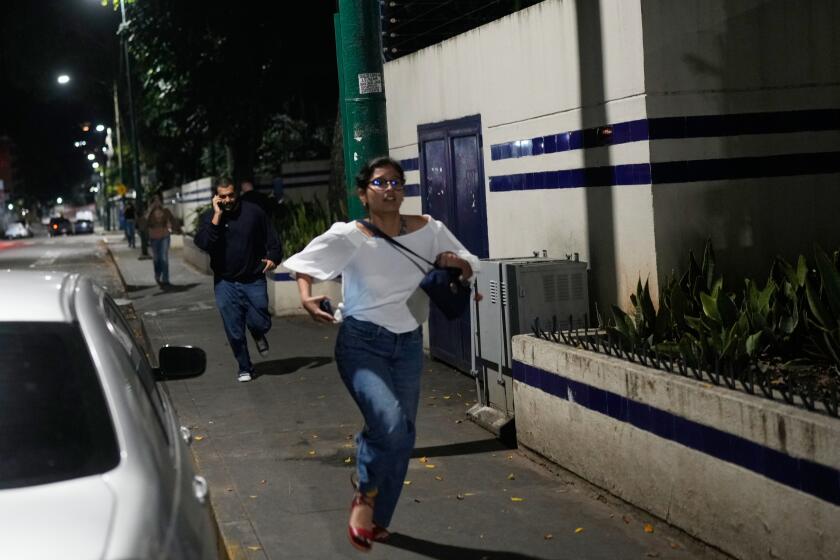
The explosions in Caracas, which occurred on the third day of 2026, were reported to be at least seven blasts. People rushed into the streets, and others took to social media to share their experiences. It was unclear if there were casualties, and the attack itself lasted less than 30 minutes. Trump stated that the strikes were carried out "successfully."
The Federal Aviation Administration issued a ban on U.S. commercial flights in Venezuelan airspace due to “ongoing military activity” before the explosions.
Escalating Tensions
The strike came after the Trump administration had been increasing pressure on Maduro for months. The CIA was behind a drone strike last week at a docking area believed to have been used by Venezuelan drug cartels — the first known direct operation on Venezuelan soil since the U.S. began strikes in September.
For months, Trump had threatened potential strikes on targets on Venezuelan land following attacks on boats accused of carrying drugs. Maduro has criticized these operations as an attempt to oust him from power.
Aftermath and Reactions
In the aftermath of the attack, some streets in Caracas filled up with armed individuals and uniformed members of a civilian militia. However, other areas of the city remained empty. Parts of the city experienced power outages, but vehicles moved freely.
Videos from Caracas and an unidentified coastal city showed tracers and smoke in the sky, with repeated muted explosions illuminating the night. Other footage showed cars passing on a highway as blasts lit up the hills behind them. These videos were verified by The Associated Press.
Smoke could be seen rising from the hangar of a military base in Caracas, while another military installation in the capital was without power. A 21-year-old office worker, Carmen Hidalgo, described the experience: “The whole ground shook. This is horrible. We heard explosions and planes.”
Government Response and International Reactions
Venezuela’s government responded with a call to action, urging citizens to take to the streets. They declared a state of external disturbance, giving Maduro the power to suspend people’s rights and expand the role of the armed forces.
The U.S. Embassy in Venezuela, which has been closed since 2019, issued a warning to American citizens in the country, advising them to shelter in place.
Reactions to the attack emerged slowly. Inquiries to the Pentagon and U.S. Southern Command went unanswered. The FAA warned pilots that the airspace over Venezuela and Curacao was off limits due to safety risks.
Senator Mike Lee expressed concerns about the constitutional justification for the action, noting that it was unclear if Congress had been officially notified. The Armed Services committees in both houses of Congress had not been informed of any actions, according to a source familiar with the matter.
Regionally, Cuba condemned the attack, calling it a “criminal attack” and urging the international community to respond. Iran also condemned the strikes.
Global Context and Military Actions
The U.S. military has been targeting boats in the Caribbean Sea and the eastern Pacific Ocean since early September. As of Friday, the number of known boat strikes reached 35, with at least 115 people killed, according to the Trump administration.
This followed a major buildup of American forces in the waters off South America, including the arrival of the nation’s most advanced aircraft carrier, which added thousands more troops to the largest military presence in the region in generations.
Trump justified the boat strikes as a necessary step to curb the flow of drugs into the U.S. and claimed the U.S. is engaged in an “armed conflict” with drug cartels.
Posting Komentar