On the Arizona Trail, Choices Shape Bonds or Barriers
Final Leg of the Journey: From Casa Blanca Canyon to the Mexican Border
Over seven weeks this fall, Arizona Republic climate reporter Joan Meiners embarked on a journey to bike the length of the 850-mile Arizona Trail from Utah to Mexico. This is the eighth and final dispatch, covering the journey from Casa Blanca Canyon to the border with Mexico.
Rest of Day 35, Mile 800 (Passage 4: Casa Blanca Canyon)
Traversing the Santa Rita Mountains toward the final passages of the trail manifested ups and downs in new dimensions. My conversation with Arizona Trail Association Director Matt Nelson at Kentucky Camp had been energizing after so much solitude on trail. But it also delayed my start on the 30 miles into Patagonia.
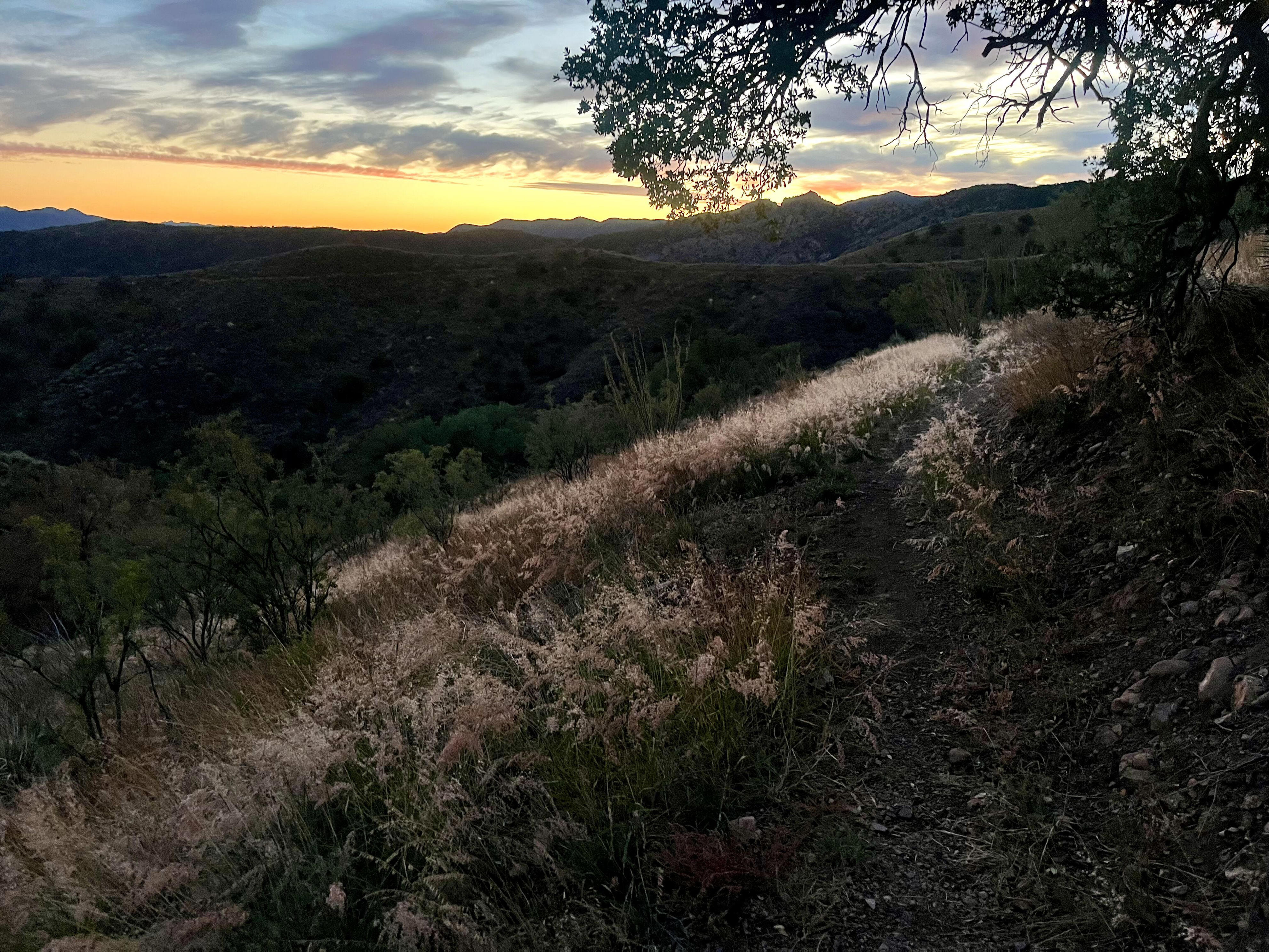
When Nelson turned back after joining me for a few miles, I pressed on with gratitude for the expertly laid singletrack that contoured along steep hillsides while offering rose-gold sunset views of snowy purple peaks above softly backlit tufts of Santa Rita Mountain grama grass.
Then things got weird, as they tend to when new shadows cast on unfamiliar landscapes are filtered through a brain that has spent entirely too much time alone. The fading light forced me to focus on not losing sight of the trail’s abrupt cliffside edge. This became harder when I passed piles of green, still-steaming large-cat scat just as the last sunbeams abandoned their post as my witness. After dark fully set in, I paused for a snack and glanced to my left to find a cow’s skull staring back at eye level from its eerily lofted perch in a juniper tree.
I had almost made it up the last climb of the passage when I noticed a string of lights drifting silently toward me in a ghostly smooth, gently bouncing motion. Given the evening’s Blair-witchy vibes and my having met almost no one else bikepacking this trail in 800 miles, and definitely not after dark, it didn’t occur to me that it might be mountain bikers.
When they caught up to me at the high point, I was feeling low and ludicrous, sitting by the trail trying to recharge my night-riding lights with my solar battery pack, which had not been as reliable in recent cloudy conditions. The damp evening was turning chilly, as was my enthusiasm for this whole endeavor, particularly these remaining miles after dark.
My worldview tends to be rooted in science and hard evidence for what is real. But I can’t deny feeling like the universe had sent me an angel from the darkness in Ashley Klassen. Not only was this professional ski guide from Colorado keeping up with her three male companions on a six-day bikepack of the Arizona Trail, but she somehow found the energy to lend me a brighter light and ensure I made it to Patagonia in their company.
In a group, I was revived. The thrill of pushing the pace on terrain that remained shrouded in blackness until illuminated two seconds before our wheels were suddenly navigating its rocks and cliffs and cactus pushed all else from the mental spotlight.
Day 36, Mile 824 (Passage 3: Canelo Hills West)
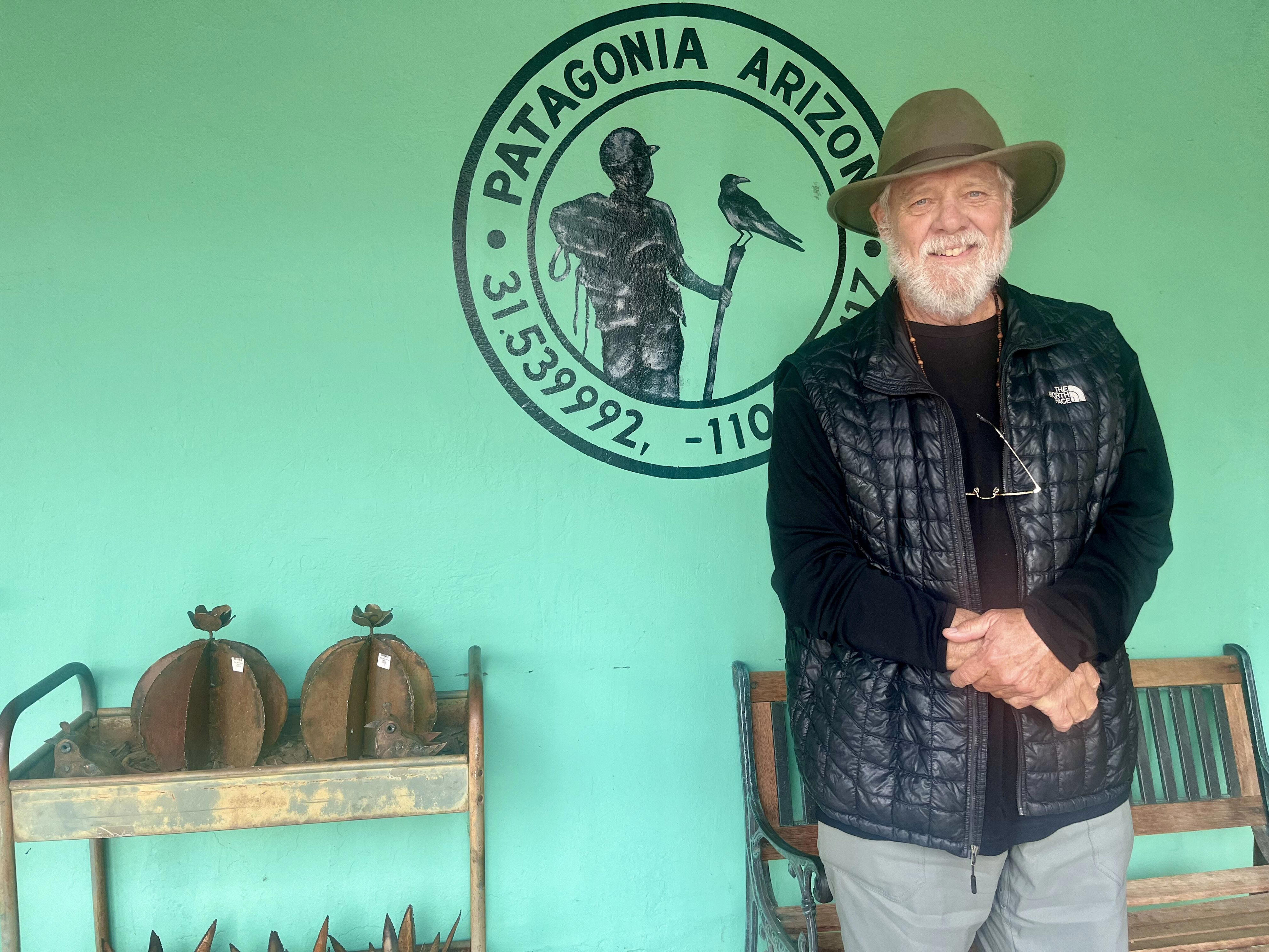
Safely in Patagonia, I met with Tom Nelson, the current board president of the environmental nonprofit Save the Scenic Santa Ritas. The organization was started 30 years ago to keep mining out of the Santa Rita Mountains, he said, and has spanned opposition to a string of attempts.
The most recent project, Copper World, will “supply the copper that we use every day and the copper essential to powering our green energy future,” according to its proponent, Hudbay Minerals. “Hudbay is the third company to try this here,” Nelson said. “Mining is central to the history of Arizona, particularly copper mining.”
But that doesn’t mean it needs to happen in every part of the state, he added. Hudbay’s first phase plans to invest $1.7 billion to generate copper and jobs over a project lifespan of 20 years. After the ore has been extracted, smelted and used in products like plumbing systems, wind turbines and electronics, the impact across 4,500 acres in the heart of the Santa Rita Mountains would leave behind an open pit that Nelson said would dip below the region’s water table.
The mine would also force a reroute of passage 5 of the Arizona Trail, where I had ridden a few miles with its director. The Arizona Department of Environmental Quality has already granted the required air and water permits and Hudbay has purchased land surrounding the mining site. But the company has yet to complete its final feasibility study, Nelson said, and the plan still faces legal challenges related to the disposal of 1.9 billion tons of waste rock.
Like the activists opposing mining at Oak Flat by Resolution Copper, this group trying to save the Santa Ritas argue that there is plenty of copper available for recycling from urban spaces or mined from less sensitive or sacred areas.
Day 37, Mile 846 (Passage 2: Canelo Hills East)
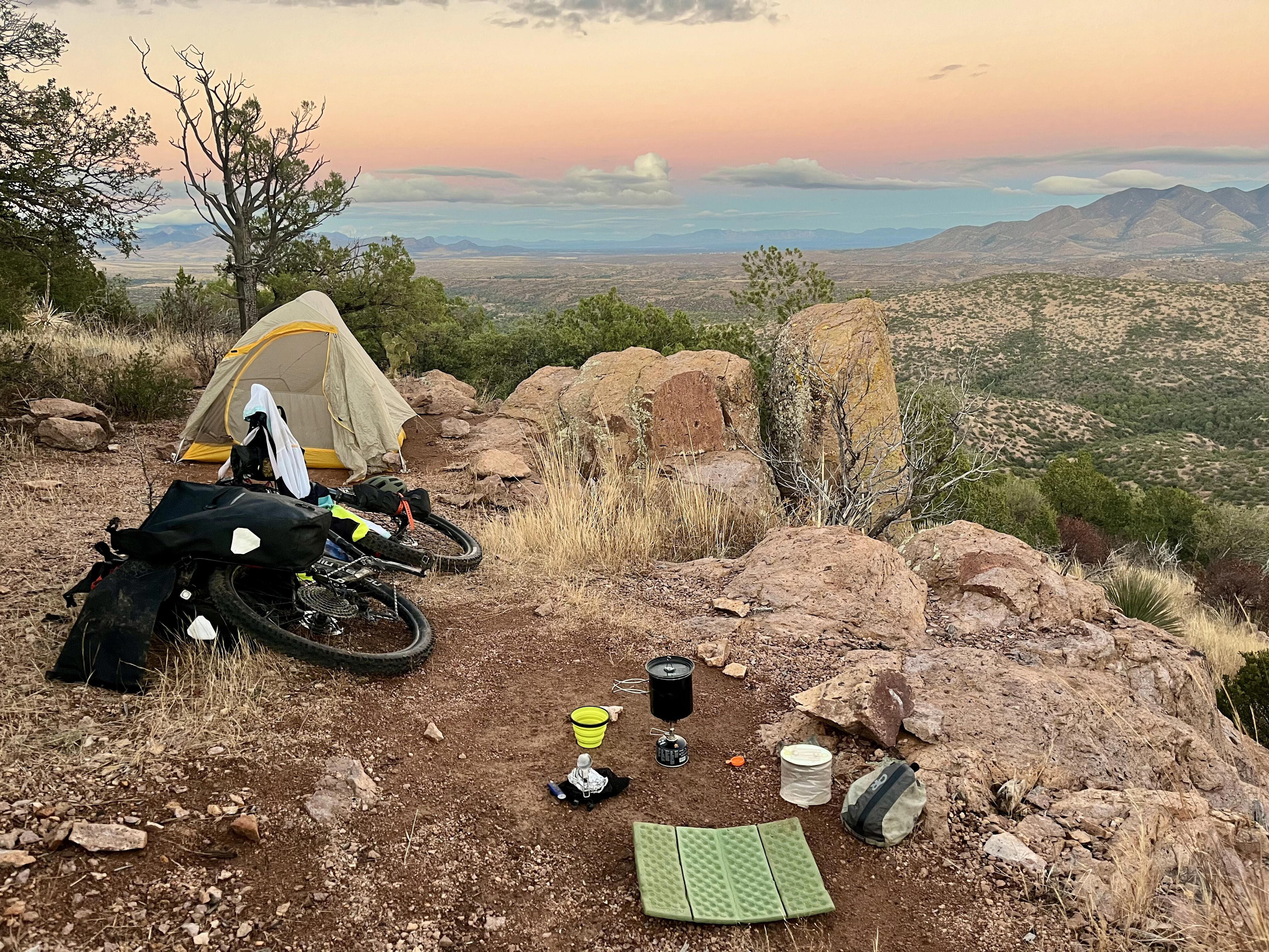
In the morning as the clouds cleared, I saw that my surveillance of the Canelo Hills scenery was itself being surveilled by a hovering blimp belonging to the U.S. Customs and Border Patrol. It felt like being watched by the all-powerful Oz, if Oz was also cutting a track for a giant wall to control traffic on the yellow brick road.
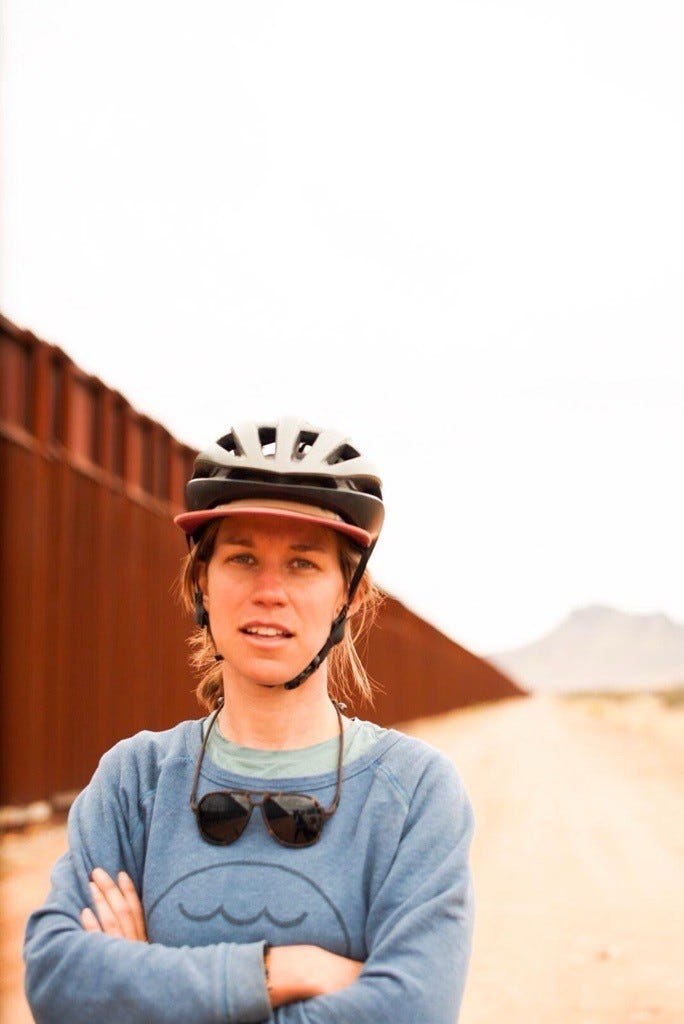
In Tucson, I had met with Sarah Swallow, a bikepacking pioneer who has carved out a career as a routesetter and international gravel biking ambassador. My first question for her was what she thought of the Arizona Trail’s route up and down every accordion fold of the state’s landscape.
She laughed and answered, essentially, that she prefers gravel roads that connect places and people in an experience that feels more like community building than rock scrambling with a bike. When she designs routes, she looks to link remote vistas with interesting rural towns.
Swallow has bikepacked all over the world. We traded stories about men who have seemed to insist we should be afraid of doing this. “Aren’t you scared to be out there alone?” “Don’t you worry about running into the wrong types?” “You’re doing this all alone, all by yourself?” This last question was posed to me no less than six times by one man at the bar I’d stopped at for water before Saguaro National Park.
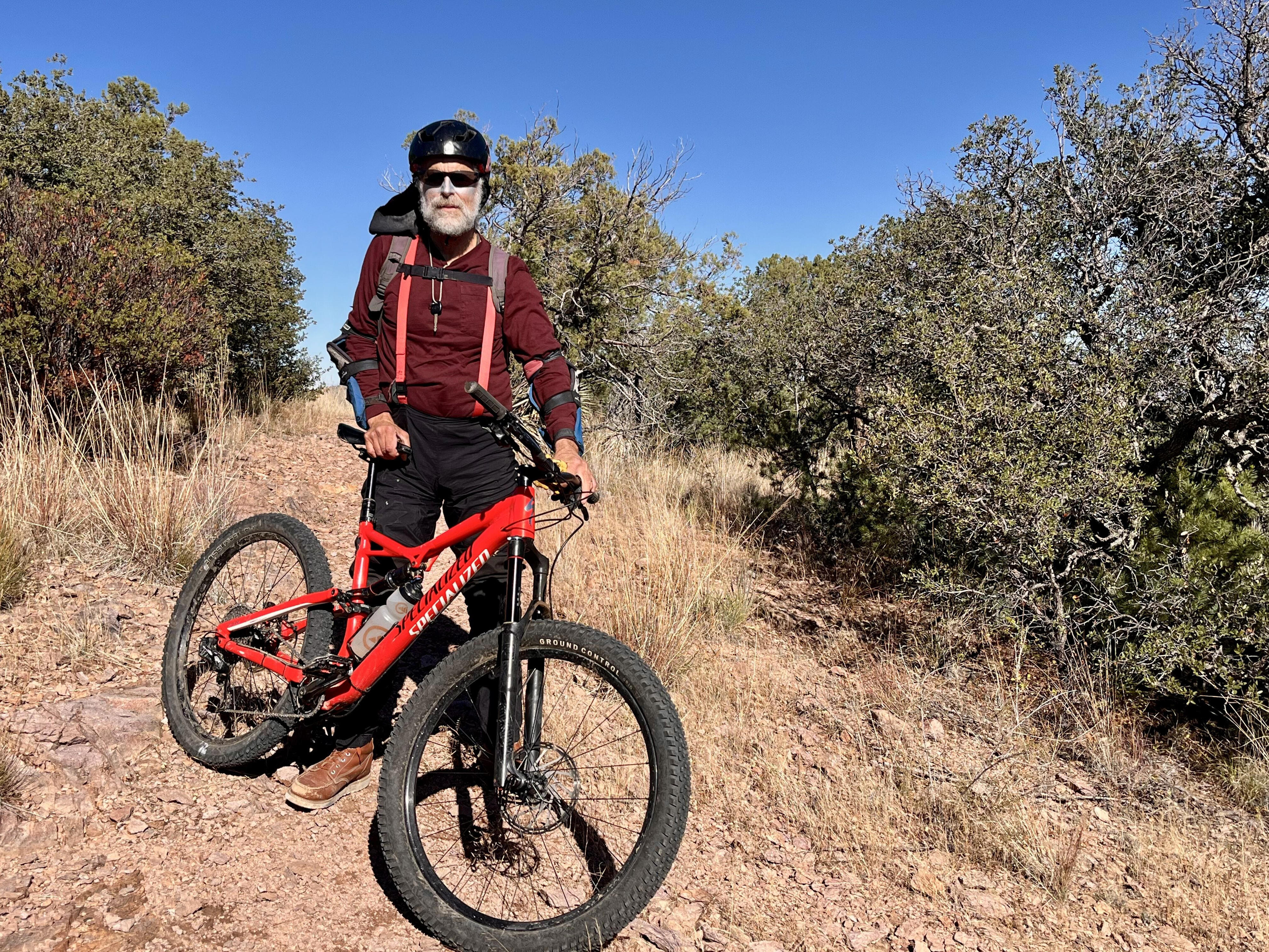
Day 38, Mile 859 (Passage 1: Huachuca Mountains)
In the morning, Darin Grassman, who I had befriended when we were 11, packed up the car while I loaded my bike with all my usual gear, determined to finish the trail with the full load. We examined the map together and picked a meeting place at a road junction two miles from the Arizona Trail's bike route endpoint at border monument 103.
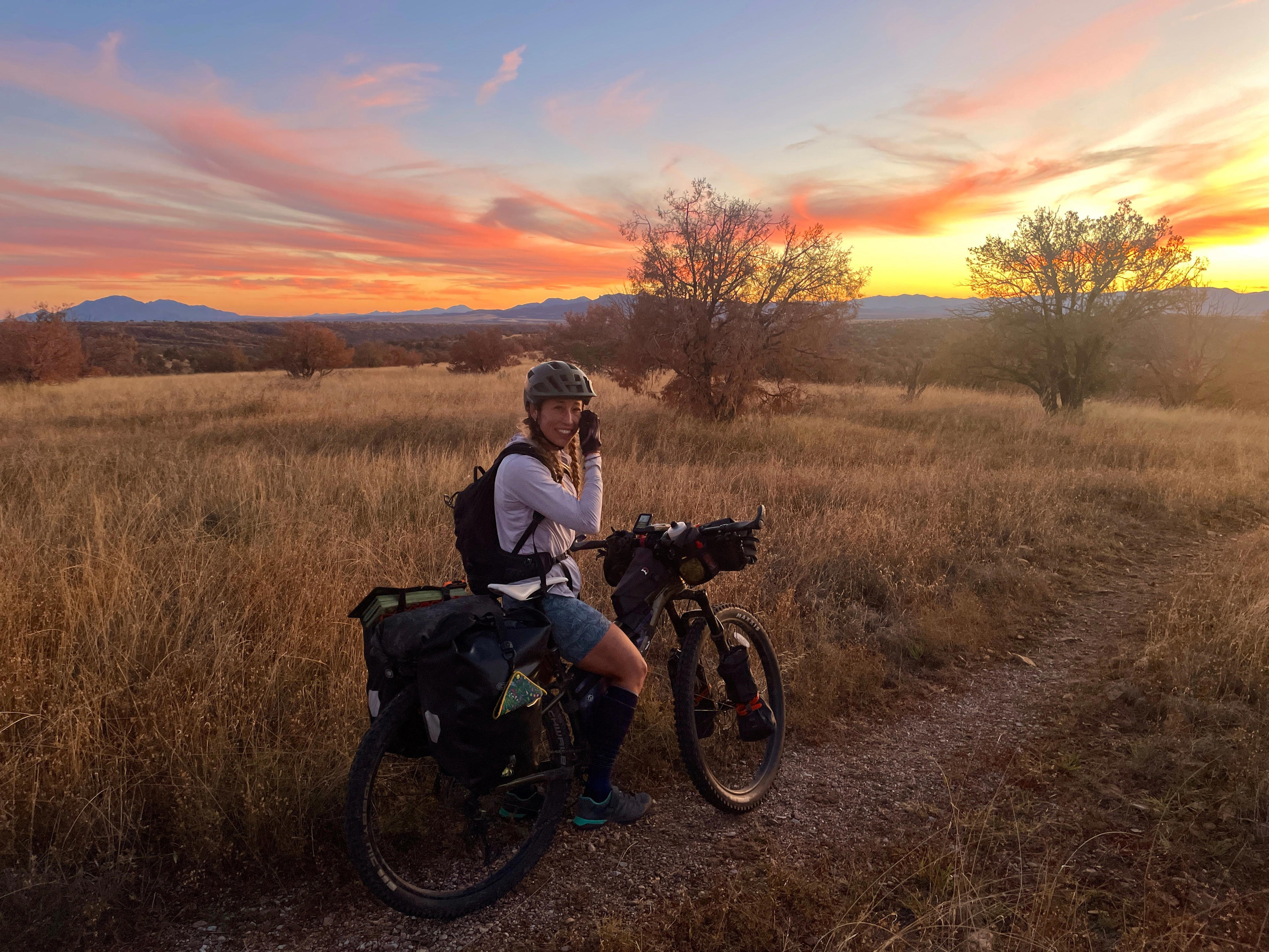
Unfortunately, the Trump administration had other plans. When Darin and I arrived at the trail’s final turn, we were met by a sign that the road was only open to construction access. I knew there was border wall construction happening in the area, but I had been assured there were no explosions planned for that day so I’d expected to be able to roll right to the border.
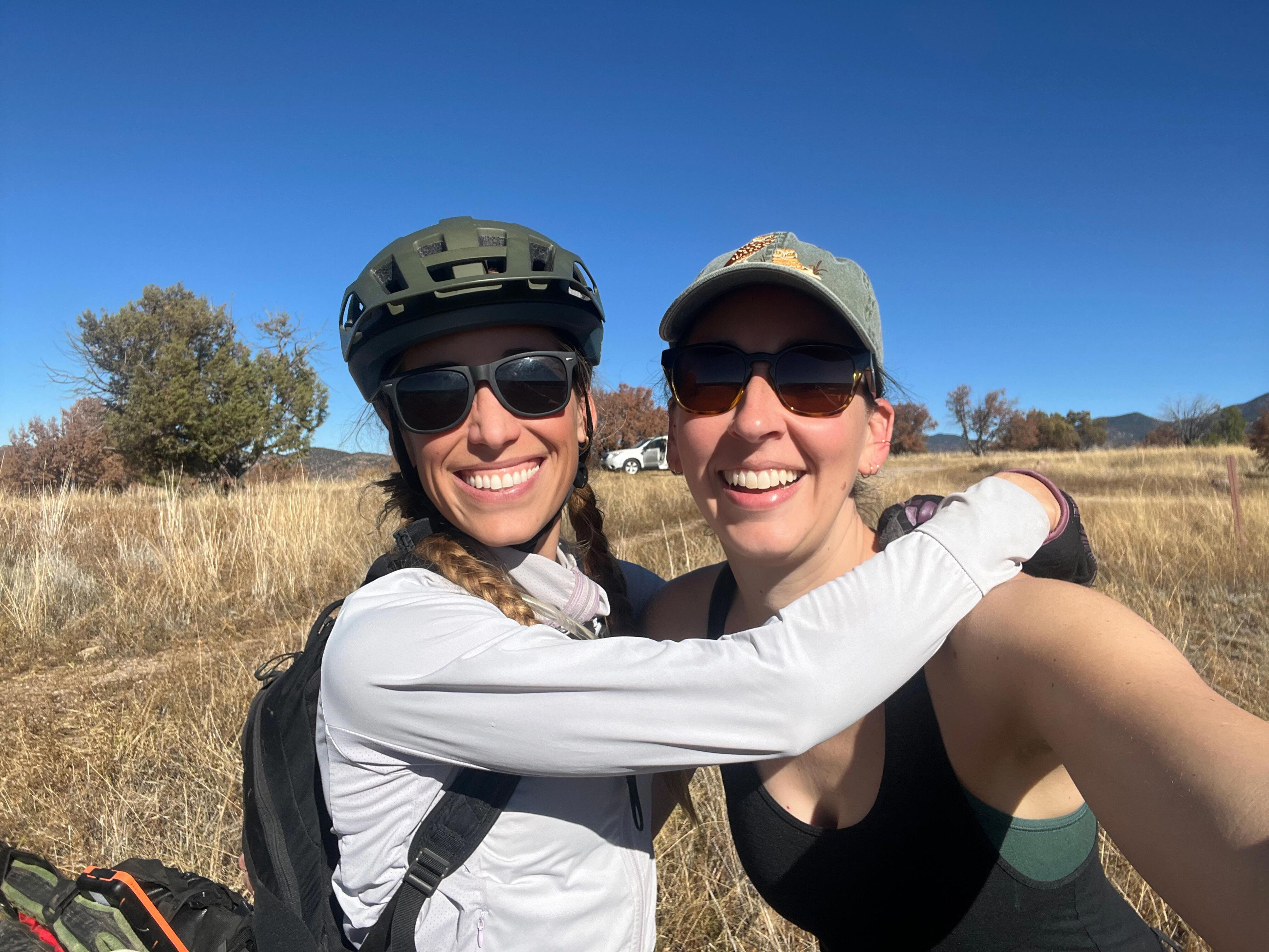
To this man’s credit, he took this declaration surprisingly well and offered to escort me through the heavy equipment so that I could still claim victory in this quest. So I rode the final two miles with a border wall security guard and my childhood friend following in vehicles, mentally sifting through the layers of meaning in this moment as I descended to its conclusion.
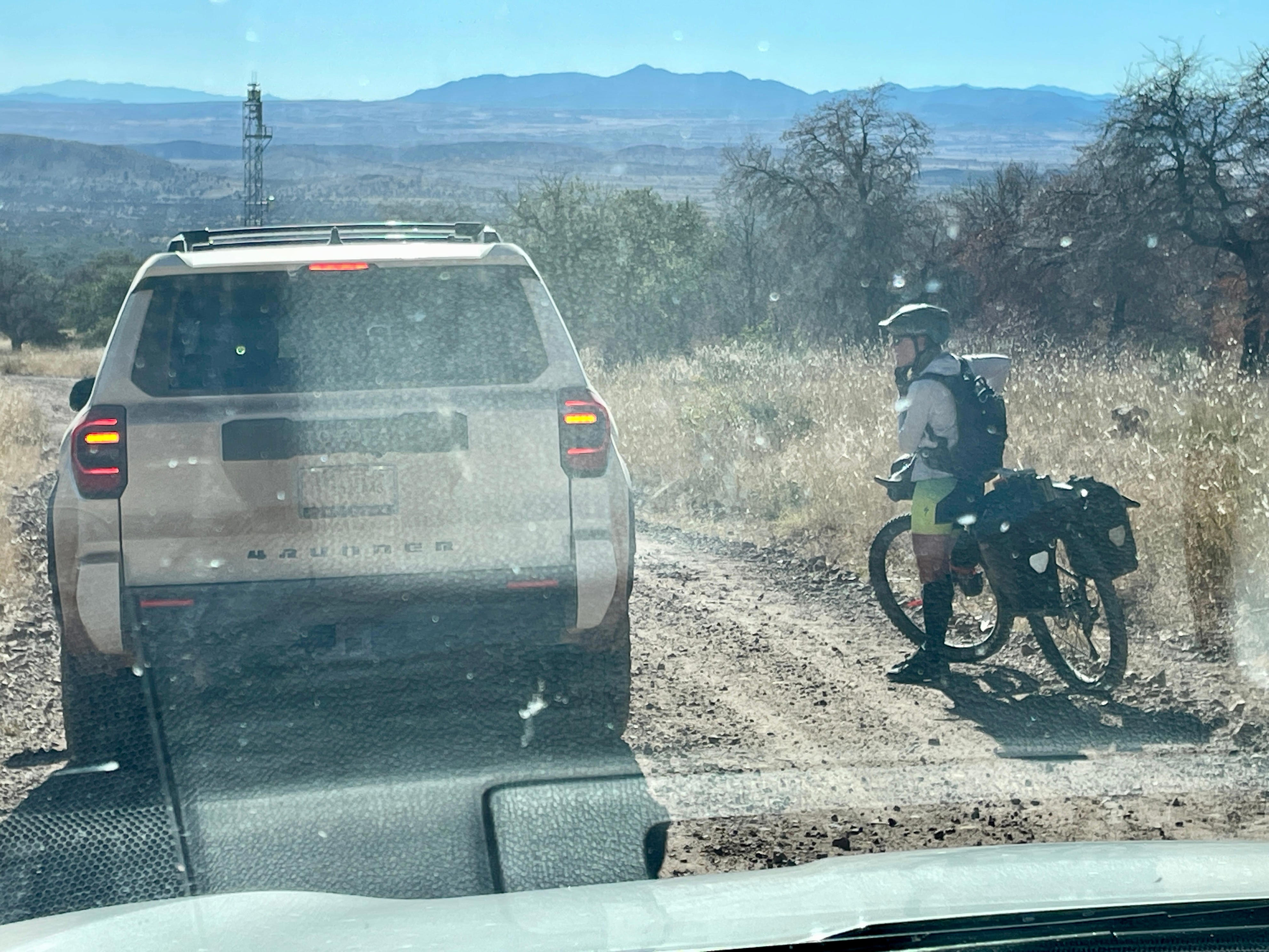
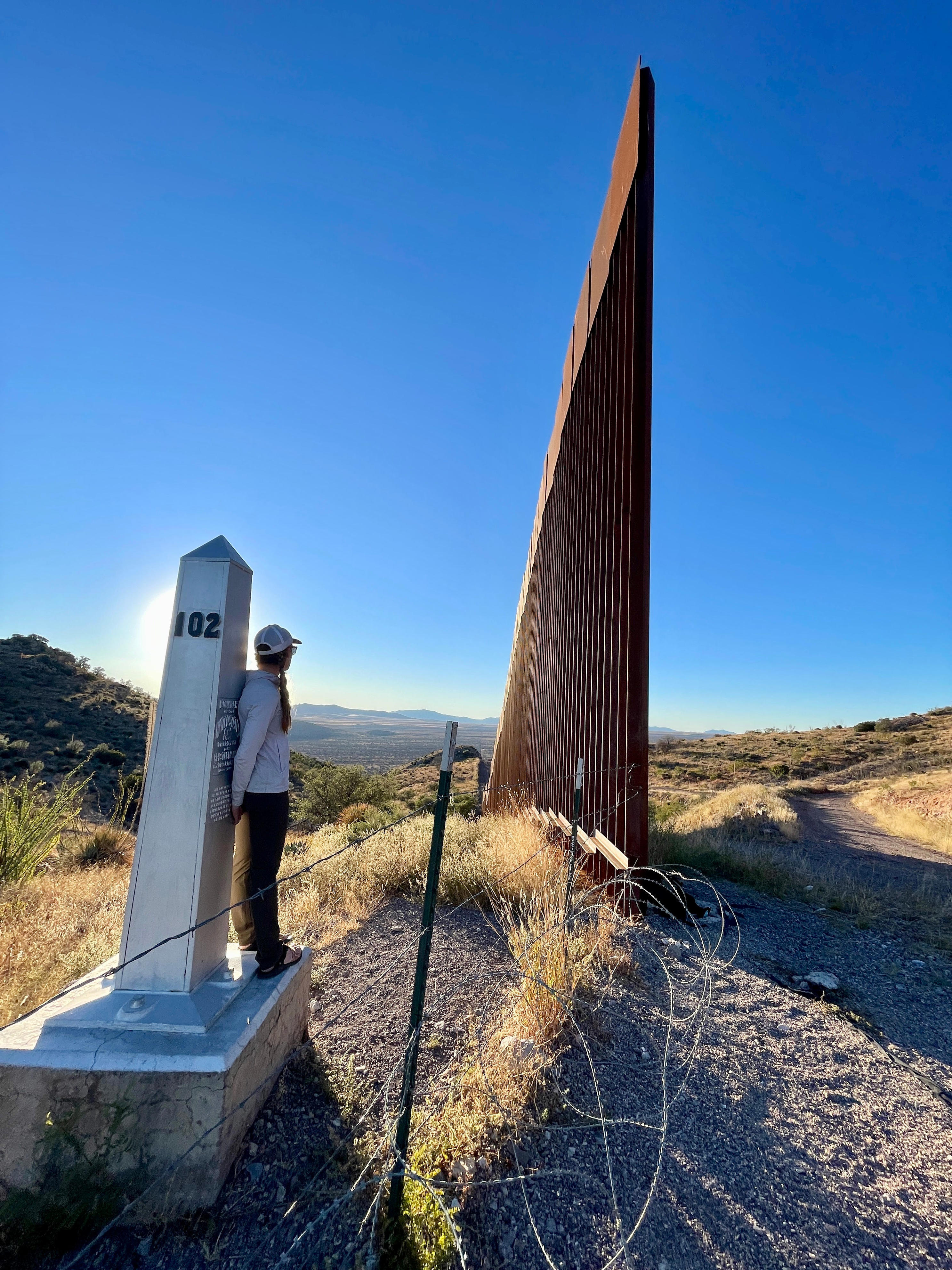
After driving away from the construction zone, Darin and I decided that it all felt a bit anti-climactic and that we should drive up the road and also hike the trail to the other terminus. When we reached it, I climbed through the razor wire to touch the southernmost point on the official Arizona Trail, as much for myself as for future travelers on the route who will arrive at this spot to find the monument walled off behind steel bars 30 feet high.
Back in the car heading north at twilight, the journey home felt like a hurried unraveling of the insights, moments and miles I had shed literal blood, sweat, tears and shoe rubber to stitch together inch-by-inch. I was glad that Darin, who has witnessed so many other weird events in my life, had been there for the end.
Climate change will unravel our world in both predictable and unpredictable ways. We have the scientific knowledge and collaborative networks to be able to warn and take care of each other as that journey unfolds. Or we can silo ourselves off and navigate the darkness divided, in fear of the unknown and of doing things differently.
At a time when million-year-old peaks may give way to 20-year mining projects for the production of powerful communications technologies, we get to choose whether that path connects or crumbles our access to nature and community.
We decide if it ends with a monument to success or razor wire.
Posting Komentar