Juveniles Ignore Consequences of Violent Crimes, Says Las Cruces Police Chief
Addressing the Rising Concern of Juvenile Crime in Las Cruces
In recent years, the issue of juvenile crime has become a pressing concern for law enforcement and community leaders in Las Cruces, New Mexico. According to Jeremy Story, Chief of the Las Cruces Police Department (LCPD), there is a growing problem with juveniles committing crimes without fear of consequences, especially as the severity of their actions increases. He emphasized that the current system lacks the necessary resources to effectively guide these young individuals back on the right path.
Story addressed this issue during the latest episode of “Bridging the Badge,” a monthly video podcast hosted by LCPD. In his discussion, he highlighted the importance of both accountability and rehabilitation in dealing with juvenile offenders. He stated that the current approach is not achieving the desired results, as many juveniles continue to engage in criminal behavior despite being involved in the justice system.
The Dual Challenge of Accountability and Rehabilitation
Rehabilitation, according to Story, should focus on helping juveniles improve their lives and contribute positively to society. However, he pointed out that the current system is failing to provide the necessary support and services to achieve this goal. Instead, many juveniles are not learning from their mistakes and are repeating their offenses.
One of the key issues identified by Story is the lack of respect for probation among some juveniles. He noted that when they are on probation, they often feel that they can continue their previous behaviors without consequence. This lack of accountability undermines the entire rehabilitation process and perpetuates a cycle of criminal activity.
The Role of Social Media in Juvenile Crime
During the podcast, Story also discussed a troubling trend among some juveniles in Las Cruces: the use of social media to boast about possessing guns. He described how this behavior has become an accessory for some young people, similar to how a purse might be for a young woman. This trend is concerning because it contributes to a culture of violence and can lead to serious consequences.
Story explained that many of these individuals are linked to violent crimes, including drive-by shootings and homicides. He pointed out that arguments over social media—often related to gangs, drugs, money, or personal relationships—can escalate into real-life conflicts. These disputes sometimes result in tragic outcomes, such as homicides.
Statistical Insights on Juvenile Crime
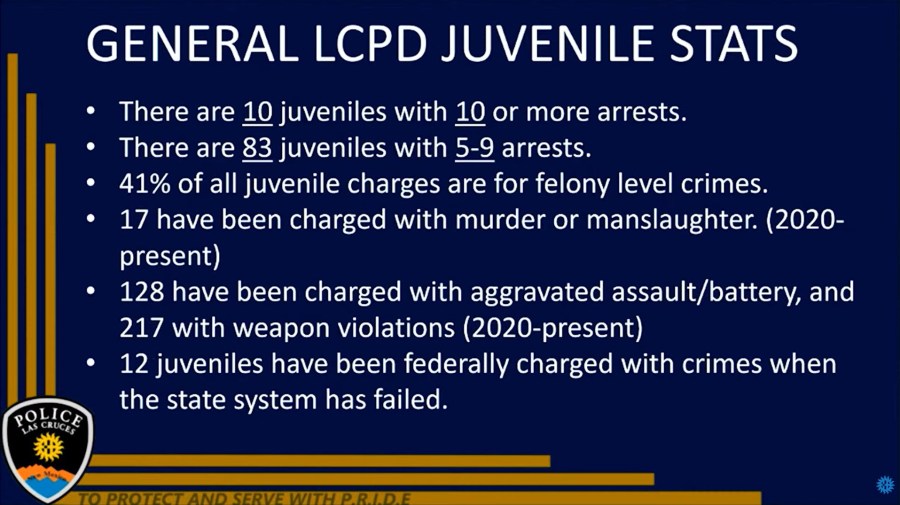
To illustrate the gravity of the situation, Story shared some statistics from LCPD regarding juvenile crime in Las Cruces from 2020 to the present. These figures highlight the prevalence of violent behavior among young people in the area.
Some of the most alarming data points include:
- 17 juveniles charged with murder or manslaughter since 2020.
- 217 juveniles charged with weapon violations.
- 41% of all juvenile charges are for felony-level crimes.
These numbers indicate a significant portion of juvenile offenders are involved in serious criminal activities, which underscores the need for more effective intervention strategies.
A Call for Systemic Change
Story’s comments reflect a broader call for systemic change in how the justice system addresses juvenile crime. He emphasized the need for a balanced approach that includes both accountability and rehabilitation. By providing the necessary resources and support, the system can help juveniles make positive changes in their lives and reduce the likelihood of future offenses.
As the community continues to grapple with this issue, it is clear that addressing the root causes of juvenile crime will require a multifaceted approach involving law enforcement, educators, and local leaders.

Posting Komentar