IDF Plans Inspection Site at Rafah Border Crossing Upon Reopening
Government Plans to Reopen Rafah Border Crossing
Israeli television reported that the government is expected to order the reopening of the Rafah Border Crossing between Gaza and Egypt in the coming days. This move is part of concessions made by Prime Minister Benjamin Netanyahu during his meeting with US President Donald Trump in Florida this week. Netanyahu will hold a security consultation in Israel on Sunday, where he will share these concessions with the public.
The concessions include the reopening of the Rafah crossing in both directions, along with an additional Israeli "inspection site" on the Gazan side, according to Channel 12 news. Israel had previously stated it would open the crossing for people entering Gaza once Hamas returns all the hostages abducted during the Hamas attack on October 7, 2023, which sparked the war in Gaza. The remains of one hostage, Police Master Sgt. Ran Gvili, are still in Gaza.
According to the unsourced report, the IDF will operate its own inspection site on the Israeli-controlled Gazan side of the reopened crossing, in addition to Egyptian and international forces that will secure the crossing itself. The Israeli site will be equipped with devices to monitor people entering Gaza, and the IDF will be able to turn back people trying to enter the Strip from Egypt.
The Rafah crossing is normally meant only for people, not cargo, but it has also been used by Gaza-bound aid trucks amid the war. Israel seized the Gazan side of the crossing in May 2024 and said last month it would reopen the crossing for outgoing traffic as part of the US-brokered October 9 ceasefire deal with Hamas. Egypt rejected the statement, saying the one-way opening amounted to forced displacement of Palestinians from Gaza.

Angelina Jolie Visits Rafah Crossing
On Friday, American actor and film producer Angelina Jolie visited the Rafah crossing. Jolie, who was a special envoy to the UN refugee agency for over two decades until 2022, met with members of the Red Crescent on the Egyptian side of the crossing. She then visited a hospital in the nearby city of Arish to speak with Palestinian patients, according to Egyptian officials.
“What needs to happen is clear: the ceasefire must hold, and access must be sustained, safe and urgently scaled up so that aid, fuel and critical medical supplies can move quickly and consistently, at the volume required,” said Jolie.
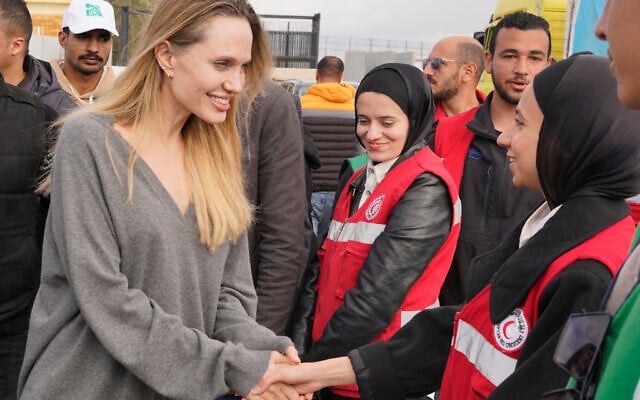
According to a statement from her team, Jolie’s visit sought to raise support for the displaced and humanitarian workers in the crises in Gaza as well as in Sudan. The foreign ministers of eight Arab and Muslim nations, including ceasefire mediators Egypt, Qatar and Turkey, also expressed concern about Gaza’s humanitarian situation in a joint statement Friday.
The situation has been “compounded by the continued lack of sufficient humanitarian access, acute shortages of essential life-saving supplies, and the slow pace of the entry of essential materials,” said the joint statement, which was also signed by Jordan, Saudi Arabia, the United Arab Emirates, Indonesia and Pakistan.
Violence Continues in Gaza
Also on Friday, the Israel Defense Forces said that troops from the 188th Armored Brigade killed a suspect who crossed the Gaza ceasefire line in southern Gaza. The soldiers “identified a terrorist who crossed the Yellow Line” and posed an immediate threat to the troops, who “eliminated the terrorist to remove the threat,” according to the military. It did not say if the suspect was armed.
Nasser Hospital in southern Gaza’s Khan Younis said Friday afternoon that it had received the body of a young man killed by IDF gunfire in Bani Suheila, which lies near Khan Younis on the Israeli-controlled side of the Yellow Line. The man was identified in Palestinian media as Firas Abu Shanat, reportedly in his 20s.
Such incidents have occurred regularly since the Israel-Hamas ceasefire deal, with Hamas’s health ministry reporting at least 416 people killed by IDF gunfire since October 11. The figure cannot be independently verified and does not distinguish between civilians and combatants.
Separately, Amal Abu Al-Khair and her 5-year-old grandson Saud burned to death Thursday night in their nylon tent in western Gaza City’s Yarmouk area, on the Hamas-controlled side of the Yellow Line. The nylon tent caught fire from cooking, a neighbor said.
Harsh Winter Conditions in Gaza
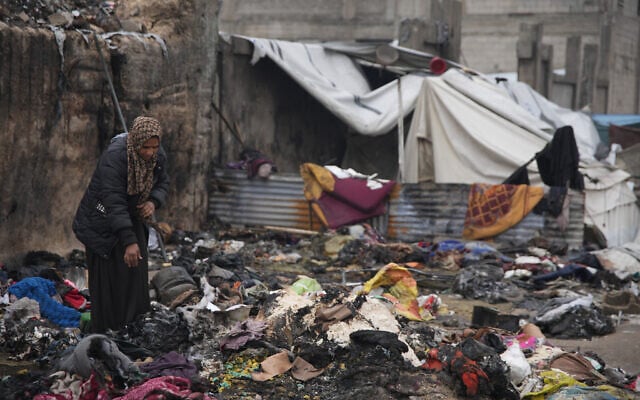
As 2026 begins, thousands of Palestinians battle harrowing winter conditions in flimsy makeshift housing and the humanitarian crisis persists. Over the past weeks, cold winter rains have repeatedly lashed the sprawling tent cities, causing flooding, turning Gaza’s dirt roads into mud and causing buildings damaged in Israeli bombardment to collapse.
UNICEF says at least six children have now died of weather-related causes, including a 4-year-old who died in a building collapse. At least three children have died of hypothermia, according to Gaza’s Hamas-run health ministry. High temperatures in December were in the 60s Fahrenheit (15-20 Celsius), but dipped into the mid-40s F (6-8 C) on some nights.
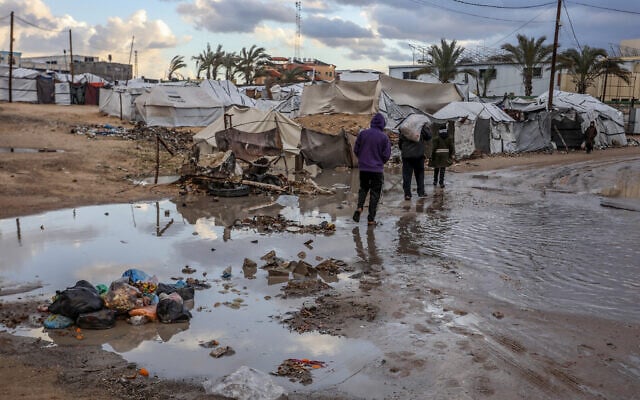
Aid groups say not enough shelter materials are getting into Gaza during the truce. There is also concern that Israel’s recent suspension of more than three dozen international aid groups from operating in Gaza will make it even harder to get supplies like tents in. The Diaspora Affairs Ministry said the organizations did not comply with stringent new “security and transparency” requirements concerning their employees.
UN Chief Antonio Guterres on Friday called for the ban “to be reversed, stressing that international non-governmental organizations are indispensable to life-saving humanitarian work and that the suspension risks undermining the fragile progress made during the ceasefire,” his spokesperson Stephane Dujarric said in a statement.
“This announcement comes on top of earlier restrictions that have already delayed critical food, medical, hygiene and shelter supplies from entering Gaza. This recent action will further exacerbate the humanitarian crisis facing Palestinians,” Dujarric added.
Palestinians have long called for mobile homes and caravans to be allowed in to protect them against living in impractical and worn-out tents. In Yarmouk, people live in nylon tents near a garbage dump.
COGAT, the Defense Ministry body that oversees aid to Gaza, says it has let in hundreds of thousands of tents and tarpaulins and is waiting for international organizations to let in close to 100,000 pallets of “water-related items.”
Posting Komentar