Ford sets recall record in 2025
Ford Sets New Record for Vehicle Recalls in 2025
In 2025, Ford Motor Company made headlines not for innovation or sales, but for the sheer number of vehicle recalls it issued. According to industry data, nearly 13 million products were recalled last year, making it the highest number of recalls for any automaker in a single year. This figure far surpasses the second-place competitor, Stellantis, which had 12.7 million recalls — an increase of about 10 million from the previous year.
Ford’s total of 152 recalls marked a significant milestone in the automotive industry. The company not only outperformed its rivals, including General Motors and Stellantis, but also nearly doubled the previous record of 77 recalls set by General Motors in 2014. This surge in recalls has raised questions about the challenges faced by automakers as they navigate the complexities of modern vehicle production.
A Year of Challenges for Detroit's Big Three
The year 2025 was particularly challenging for Detroit’s Big Three automakers, as they grappled with issues ranging from traditional mechanical problems to advanced software glitches. Ford, in particular, faced a wide array of recall-related issues. These included corroding seat belts in Mustang models, malfunctioning rearview cameras in super-duty trucks, and software errors in Ford Broncos. These problems, among others, contributed to the record-breaking number of recalls.
Jeff Gilbert, an automotive reporter for WWJ 950, noted that the number of recalls is indeed high. “It’s a record. No car company has come close to that number of recalls in a year,” he said. While some may question whether this indicates that automakers are overextending themselves, Gilbert pointed to the broader trend of increased technological complexity in modern vehicles.
Balancing Innovation and Quality Control
As automakers introduce more advanced technology into their vehicles, the risk of defects and malfunctions increases. “Certainly everyone is spread too thin these days,” Gilbert explained. “More so than being spread thin, you have carmakers who are trying to bring in a lot of new people because there’s a lot of new technology.”
Despite the challenges, Ford has been actively working to address these issues. “They’re trying to fix it, because it could be an issue as things develop,” Gilbert added. By resolving these problems, Ford aims to rebuild trust with its customers, who often face the inconvenience of returning their vehicles to dealerships for repairs.
Impact on Consumers and Industry Response
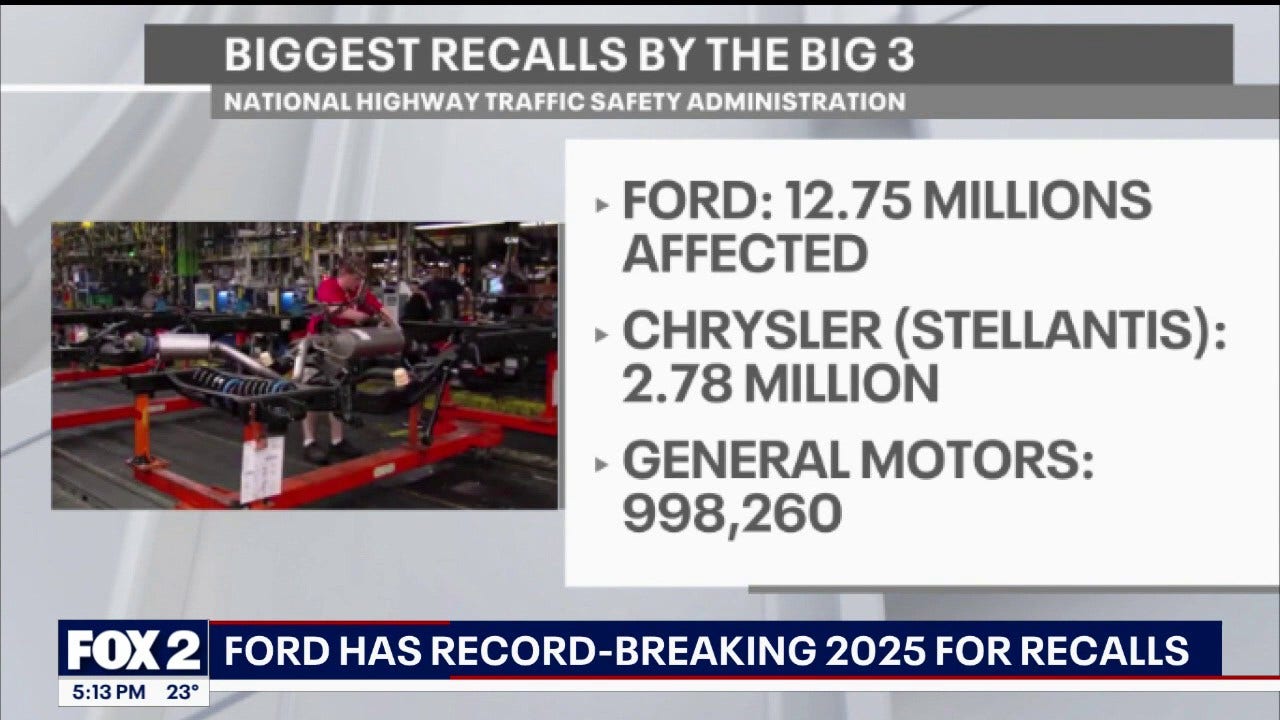
The scale of Ford’s recalls affects millions of consumers. More than 12 million vehicles were impacted by Ford’s recalls, followed by Stellantis with over 2.5 million and General Motors with more than 998,000. For many drivers, the process of checking for recalls and scheduling repairs can be frustrating. “Consumers get irritated when they have to take a vehicle back to the dealership,” Gilbert said. “So, that is a problem, but they’re trying to make sure they dive in, see where all the issues are, and get them fixed.”
For those concerned about potential recalls, the National Highway Traffic Safety Administration (NHTSA) provides a resource to check if a vehicle is affected. Drivers can visit the NHTSA website and enter their vehicle identification number (VIN), which is typically located in the corner of the driver’s side window.
Industry Trends and Consumer Trust
While the high number of recalls may raise concerns, experts like Gilbert suggest that it is not necessarily a sign of declining quality. Instead, it reflects the growing complexity of modern vehicles. As automakers continue to innovate, the challenge lies in maintaining quality control across increasingly sophisticated systems.
Ford’s efforts to address these issues demonstrate a commitment to customer satisfaction. However, the road to restoring trust will require consistent improvements in both product reliability and communication with consumers.
Conclusion
The 2025 recall season has highlighted the challenges facing the automotive industry as it balances innovation with quality assurance. Ford’s record number of recalls underscores the need for ongoing vigilance and proactive measures to ensure consumer safety and confidence. As the industry moves forward, the focus will remain on addressing current issues while preparing for the next wave of technological advancements.
Posting Komentar