US Launches Strong Strikes in Nigeria Against Islamic State, Trump States
Escalation of US Military Action in Nigeria
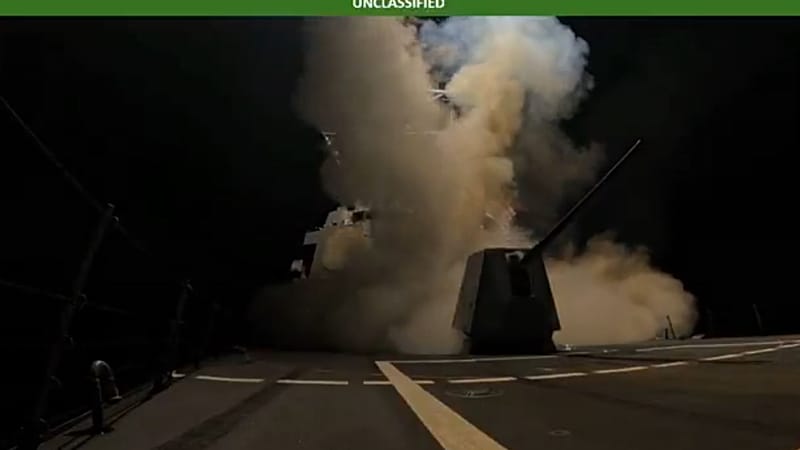
The United States carried out a series of "powerful and deadly" airstrikes on Thursday against Islamic State militants in northwestern Nigeria, as announced by US President Donald Trump. This operation represents a significant escalation in the ongoing conflict that Nigeria's military has been struggling with for years. The Nigerian armed forces are facing challenges from multiple armed groups, which have caused widespread instability across the country.
Trump referred to the militants as "terrorist scum," accusing them of "viciously targeting and killing mostly innocent Christians." He claimed that the US military executed "numerous perfect strikes" during the operation. The US Africa Command (AFRICOM) later confirmed that the attack was a joint effort, part of an intelligence exchange and strategic coordination between the US and Nigeria.
In November, Trump ordered the US military to prepare for potential action in Nigeria to counter Islamist militant groups. These strikes are seen as crucial support for Nigeria’s security forces, which are often overwhelmed and under-resourced as they deal with various security crises throughout the country.
Military Operations and Security Challenges
In states like Sokoto, the Nigerian military frequently conducts airstrikes targeting militant hideouts. The government has also initiated mass recruitment of security personnel to bolster its efforts. This increased activity reflects the severity of the security situation in the region.
Nigeria's foreign ministry released a statement on Friday, emphasizing that the country is engaged in structured security cooperation with international partners, including the United States. This collaboration has led to precise attacks on terrorist targets in the Northwest through airstrikes.
President Bola Ahmed Tinubu reiterated that Nigeria promotes religious tolerance and stated that security challenges affect people regardless of their religion or region. However, Trump had previously designated Nigeria as a "Country of Particular Concern" due to the "existential threat" posed to its Christian population. This designation allows for sanctions against countries involved in serious violations of religious freedom.
Impact of the Security Crisis
The security crisis in Nigeria affects both Christians, who are predominant in the south, and Muslims, who form the majority in the north. Jihadist groups such as Boko Haram and the Islamic State of West Africa have caused devastation in northeastern Nigeria for over a decade, resulting in thousands of deaths. According to Acled, a group that analyzes political violence globally, most of the victims were Muslims.
Nigeria is home to at least two organizations linked to the Islamic State: the Islamic State of West Africa, an offshoot of Boko Haram operating mainly in the northeast, and the lesser-known Islamic State's Shahel Province (ISSP), known locally as Lakurawa, with a strong presence in the northwest. However, US and Nigerian authorities did not specify which organization was targeted in the recent strikes.
Root Causes of Insecurity
Analysts argue that the security crisis in Nigeria is more about governance than purely military issues. The motives for attacks vary, but armed groups often exploit the absence of state and security forces in remote areas, making it easier to recruit new members. These regions are among the poorest in the country, with high levels of poverty, hunger, and unemployment.
Nigeria’s Minister of Defence, Christopher Musa, has stated that military action addresses only 30% of the security challenges, while the remaining 70% depends on good governance. Samuel, a security analyst, highlighted that the absence of the state in remote communities allows non-state actors to present themselves as alternatives to the government.
Conclusion
The recent US airstrikes in Nigeria underscore the complex nature of the security challenges faced by the country. While military action provides immediate relief, long-term solutions require addressing the underlying social and governance issues. The collaboration between the US and Nigeria highlights the global implications of terrorism and the need for sustained international support.
Posting Komentar