More Coverage, Less Liberty
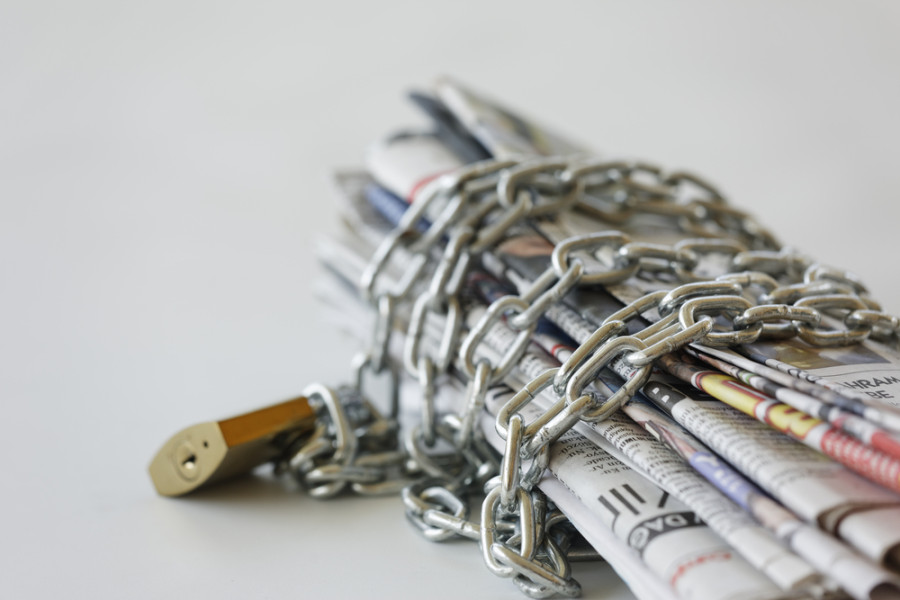
A Growing Crisis in Journalism
On December 10, 2025, the world witnessed a grim milestone. The Committee to Protect Journalists (CPJ) reported that 126 journalists and media workers were killed in 2024, marking the highest number since records began in 1992. This figure was matched in 2025 with three weeks remaining in the year. Among all nationalities, Palestinians have suffered the most, with Israel killing nearly 250 journalists since the start of the Israel-Gaza war in 2023.
This alarming trend raises critical questions about how audiences understand global events shaped by war, climate change, and unpredictable politics. Throughout history, the relationship between information and freedom has been deeply intertwined. In 1787, Thomas Jefferson famously stated, "Were it left to me to decide whether we should have a government without newspapers, or newspapers without a government, I should not hesitate a moment to prefer the latter." Today, while access to media is unprecedented, the reliability of information is not guaranteed.
Governments and tech companies often succeed in controlling the message. For example, Israel has banned international journalists from entering Gaza, while Palestinian journalists continue to report under extreme risk. Similarly, Russia restricts reporting on its "special military operation" in Ukraine. These actions highlight the growing challenges faced by journalists worldwide.
The Evolution of Press Freedom
In the early days of the US and during the European revolutions of the 19th century, the link between information and freedom was evident. The fall of the Berlin Wall and the end of the Cold War allowed international media organizations greater freedom to operate in the former Soviet bloc. As these countries embraced political change, they encouraged freer media to flourish within their societies.
Although these media were often influenced by political and business interests, there was a level of plurality that had not existed before. The 1990s, despite their imperfections, were a better time for press freedom compared to what followed. After 9/11, state power extended into controlling information and ideas, as noted by media academic Peter Greste. He argued that governments broadened definitions of "terrorism" and "national security" to justify their control over information.
Greste's perspective was shaped by his own experience. In 2013, he was detained in Egypt for 400 days on terrorism charges related to his reporting on the Muslim Brotherhood. His case illustrates the risks journalists face when seeking to report accurately on complex political situations.
The Challenge of Information Access
While governments have long sought to control media, the current situation involves a new dimension: the United States, a country that once championed free speech, is now among those restricting access. Jefferson would likely disapprove of the current US government's policies, especially regarding restrictions on Pentagon access for reporters who refuse to comply with certain limitations.
Jefferson's words also include a less-remembered part: "But I should mean that every man should receive those papers and be capable of reading them." Today, this remains a significant challenge. Despite having more media than ever, media freedom has declined. In the age of mass media, news organizations controlled distribution, but today, tech companies dominate. Not everyone receives the "papers," and even when they do, they may be harder to find and cost money, unlike social media content.
Algorithms can prioritize cat videos over serious news, while governments and criminals impose physical restrictions on journalists' work. Powerful politicians use legal threats to silence trusted news organizations.
The Changing Landscape for Journalists
In my previous career as an international correspondent, I reported on wars in the former Soviet Union and the Middle East. During the 1990s and 2000s, journalists were often restricted by governments, but rarely banned outright. Today, in places like Gaza and Russia, international journalists are unable to access areas essential for reporting. Courageous local reporters risk their lives to share the truth with the world.
The restrictions placed on journalists today may seem to favor governments, but they also confirm the enduring power of journalism to challenge authority. As the world continues to grapple with conflicts and crises, the role of journalists in informing the public remains vital. Their ability to report from the front lines, despite immense danger, underscores the importance of a free press in a democratic society.
Posting Komentar