Climate chaos and shifting power: The defining climate moments of 2025
Climate Change in 2025: A Year of Record Highs and Lows
The year 2025 was a pivotal one for climate change, marked by both alarming trends and moments of political tension. As the planet continues to warm, the effects of climate change have become impossible to ignore. From record-breaking temperatures to rising sea levels, the year has been a stark reminder of the urgent need for global action.
The Warmest Years on Record
According to the World Meteorological Organisation, the past 11 years were the warmest on record, with 2025 likely to be either the joint second or third warmest year. The Copernicus Climate Change Service noted that the last three years all surpassed the 1.5°C threshold set by the Paris Agreement. This is a critical milestone, as it highlights the accelerating pace of global warming.
Greenhouse gas concentrations reached record highs in 2025, driven by human activities such as fossil fuel combustion and land use changes. These gases trap heat more efficiently than the atmosphere can radiate it back into space, leading to increased global temperatures.
Political Shifts and Climate Policy
In January 2025, Donald Trump returned to the White House, once again pulling the United States out of the Paris Agreement. His speech at the United Nations General Assembly in September was particularly controversial, where he labeled renewable energy as "too expensive" and described climate change as "the greatest con job ever perpetrated on the world."
Trump's administration also lifted the freeze on liquefied natural gas (LNG) export approvals, leading to a surge in US sales. Despite being promoted as a transitional fuel, LNG emissions are 33% higher than coal. The US supplied almost half of Europe's LNG this year, highlighting the complex dynamics of global energy policy.
Meanwhile, China, the world's largest emitter, saw its CO2 emissions remain flat or decline for 18 months. Analysis from Carbon Brief suggests that China may have reached its peak emissions. The country's efforts in expanding renewables have led to a potential drop in fossil fuel power generation, signaling a shift in its climate strategy.
EU Climate Policy and COP30
The European Union faced internal challenges in its climate and energy policy in 2025. Plans to ban internal combustion engine cars by 2035 were rolled back, while a legally binding target to reduce greenhouse gas emissions by 90% by 2040 was finalized. The Omnibus I package, aimed at simplifying regulations, faced criticism for undermining environmental laws and creating opportunities for critics of 'net zero.'
The COP30 climate summit, hosted in Brazil, saw some notable events, including a fire in one of the pavilions. While the summit was praised for allowing climate campaigners greater visibility, it was largely seen as a disappointment. The Climate Action Tracker described it as 'disappointing,' noting little measurable progress in warming projections.
Environmental Changes and Tipping Points
In remote regions of the planet, changes are accelerating, raising concerns about irreversible tipping points. A 2025 study from ETH Zürich warned of an impending period of 'peak glacier extinction.' Glaciers in the Alps, Rocky Mountains, Caucasus, and Andes are disappearing, with Venezuela losing its last glaciers. By 2100, Central Europe could have only 3% of today's glaciers, affecting hydropower and farming communities.
A study published in June 2025 simulated the collapse of the Atlantic Meridional Overturning Circulation (AMOC), which could lead to colder temperatures in northern Europe. In Antarctica, ice shelves are destabilizing, with researchers using the British research submarine Boaty McBoatface to study the grounding line beneath the Dotson Ice Shelf.
Impact on Coastal Communities
Greenland experienced an unusually long summer, with ice melt beginning in mid-May and continuing into September. This early melt contributed to the acceleration of sea level rise, with 2024 seeing a record 5.9 millimetres of sea level rise. Coastal communities worldwide, including in South Carolina, are documenting high tides through citizen science projects.
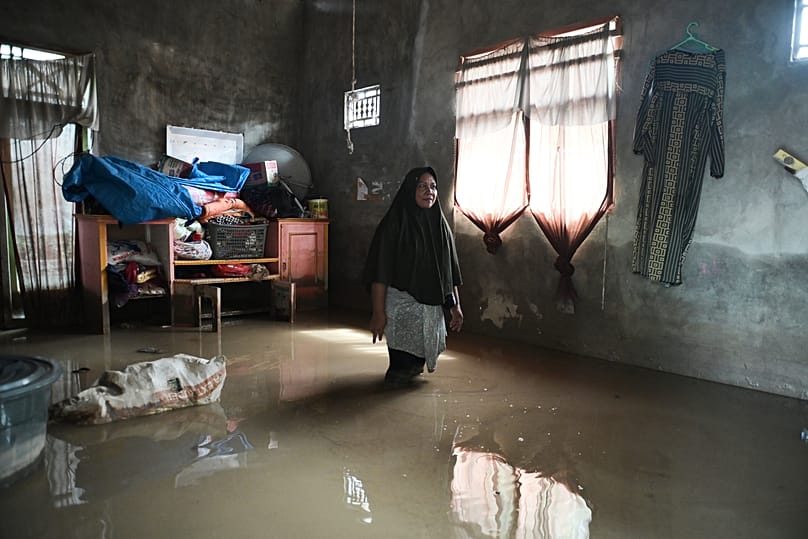
Natural disasters amplified by climate change occurred globally, including flooding in Mexico and Sri Lanka, and extreme rainfall in Indonesia and Malaysia. Droughts in the Fertile Crescent have turned the region into a dustbowl, with Iran, Iraq, and Syria facing severe water shortages.
Looking Ahead to 2026
The UK's Met Office predicts that 2026 will be one of the four warmest years on record. Professor Adam Scaife noted that the last three years have exceeded 1.4°C, with 2026 expected to be the fourth consecutive year. The first international conference on the 'Just Transition Away from Fossil Fuels' is set to take place in Colombia in April 2026, aiming to drive climate-friendly policy.




Posting Komentar